





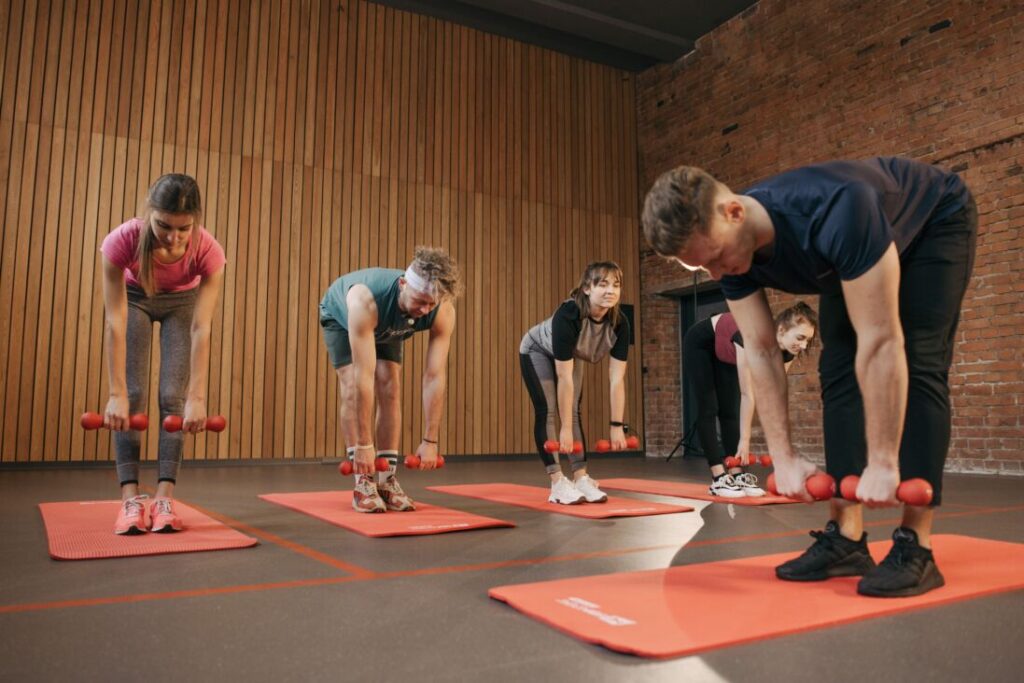
Strength training may be one of the closest things to an anti-aging tool — not because it changes how you look, but because it helps preserve how your body functions.
After 40, muscle mass begins to decline gradually, affecting metabolism, bone density and balance, and increasing the risk of injury over time.
That loss often goes unnoticed at first. There is no single moment when lifting a suitcase becomes difficult or getting up from the floor takes longer. Instead, the changes accumulate slowly — until everyday movements begin to feel harder.
Without regular strength training, muscle mass can decrease by a few percentage points each year, said Dr. Joseph Park, an assistant professor and primary care and sports medicine physician at the University of Maryland School of Medicine in Baltimore.

Muscle loss is a normal part of aging, with changes beginning around midlife.
“After around the age of 40, your muscle mass declines,” Park said. “This can lead to decreased strength and function of your body and increasing injury and decreasing mobility.”
The effects go far beyond the gym. Muscle plays a central role in how the body functions — supporting not only movement, but also metabolic health and disease prevention.
“There are many positive effects, including decreasing your fat mass and increasing insulin sensitivity,” Park said, noting that strength training can help reduce risk factors for cardiovascular disease, the leading cause of death among adults.
It can also support mental health, helping reduce symptoms of depression and anxiety, while providing a sense of routine and community.
From a physical therapy perspective, maintaining strength is one of the most effective ways to preserve mobility later in life, said Rob Rowland, a doctor of physical therapy and assistant professor at the University of Maryland School of Medicine.

“Strength training helps you preserve muscle mass, helps keep bone density, and supports the function and mobility that’s important later in life,” Rowland said, pointing to basic movements like climbing stairs or getting out of a chair.
Those everyday actions depend on muscle — and when muscle is lost, the body compensates in ways that can lead to pain and injury.
“Muscle is very expensive to keep,” Rowland said. “Once you get past 30 and 40 years old, your body is going to get rid of muscle that you’re not actively using.”
That loss has a ripple effect. As muscles weaken, more stress is placed on joints such as the knees, hips and lower back. Over time, that can contribute to chronic pain or degenerative conditions.
Park said strength training helps shift that burden back where it belongs.
“By being stronger and more coordinated, this decreases the load off of our weight-bearing joints,” he said. “This prevents the development or acceleration of degenerative joint disease or osteoarthritis.”
In other words, stronger muscles act as a protective buffer.
Rowland describes them as something like shock absorbers.
“A big muscle like the calf can act as a shock absorber,” he said. “Things like the foot, ankle, knee and hip see less force when you hit the ground.”
That support becomes especially important with age, when bones are more fragile and injuries take longer to heal.
Strength training has also been shown to improve bone density, which reduces the risk of fractures — one of the most serious health threats for older adults.
“Strength training increases your bone density, which helps prevent injuries such as fractures,” Park said.
One of the most immediate and practical benefits is improved balance — and a lower risk of falling.
Falls are a leading cause of injury among older adults, and strength plays a critical role in preventing them.
“By strength training, you can improve your balance and coordination,” Park said. “If you are stronger, you can protect against injuries such as fractures and bounce back from injuries quicker.”
Rowland noted that not all strength training automatically improves balance, but certain approaches — particularly those involving single-leg movements or power training — can make a meaningful difference.
“If you train lower body strength and power, that can affect your ability to catch yourself if you lose your balance,” he said.
For people over 40 who have been mostly sedentary, the idea of starting a strength-training routine can feel intimidating. But both experts emphasize that it doesn’t have to be complicated — or extreme.
“The safest way is to start slowly and focus on maintaining good form,” Park said. “Once you feel comfortable, you can add resistance gradually.”
That often begins with simple body-weight exercises.
“It doesn’t take a lot to start with,” Rowland said. “Just your body weight is plenty.”
Movements like squats, push-ups and basic pulling exercises can provide a full-body workout without equipment. Resistance bands can also be a useful next step, offering a way to add challenge without heavy weights.
“Resistance bands are great because they’re cheap and widely available,” Rowland said.
For beginners, the biggest risk is not doing too little — but doing too much, too quickly.
“I think people try to do too much early on,” Rowland said. “They end up with so much soreness that they can’t get back into a routine.”
Park sees a similar pattern, often tied to unrealistic expectations.
“The most important advice is to start with a realistic, attainable schedule,” he said.
Knowing the difference between normal soreness and a potential injury is also key. Mild muscle soreness that improves within a couple of days is typical. Sharp pain, joint discomfort or symptoms that don’t improve should be evaluated by a medical professional.
“Anything that limits your range of motion or doesn’t get better with time should be checked,” Park said.
Ultimately, strength training is less about building visible muscle and more about slowing the physical decline that often comes with age.
It is what allows someone to carry groceries, climb stairs, catch themselves when they trip or simply get up from the floor without assistance.
And while the loss of strength may be gradual, the benefits of maintaining it can be lasting.
“Strength training can directly influence the things that matter most later in life,” Rowland said.
The key is consistency — not intensity.
A few sessions a week, done properly and progressed gradually, can help preserve muscle, protect joints and support long-term health.
Because in the end, strength is not just about how much you can lift. It’s about how well you can live.