





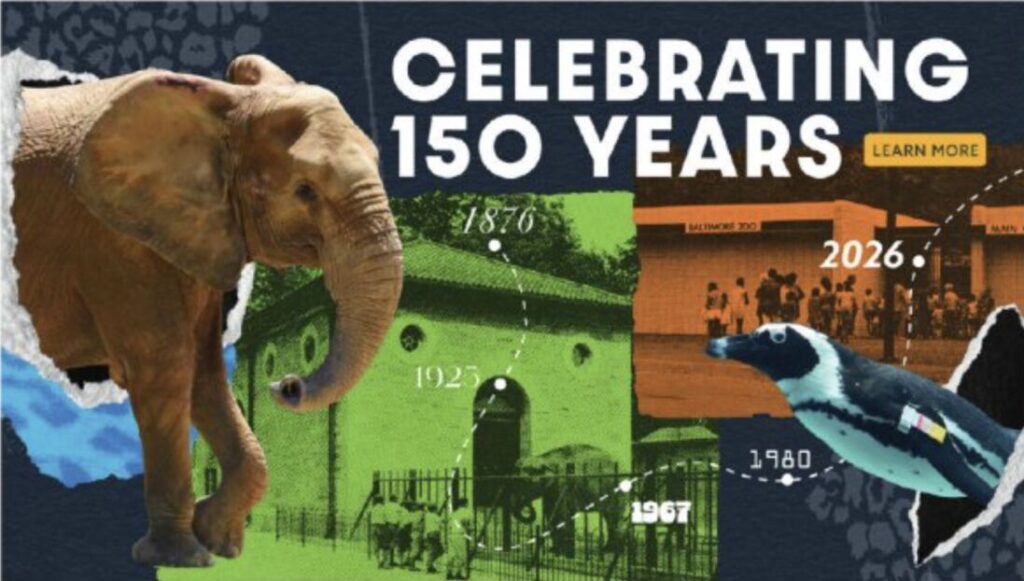
As the United States commemorated its Centennial in 1876, Maryland’s General Assembly issued a declaration to create the Baltimore Zoo. (Its origins in Druid Hill Park date to 1862, when the Park Superintendent began caring for four swans donated by city residents.)
Known since 2004 as The Maryland Zoo in Baltimore, the beloved destination now houses 1,500 birds, mammals, amphibians and reptiles. A 150th anniversary celebration is underway, making this summer extra special.
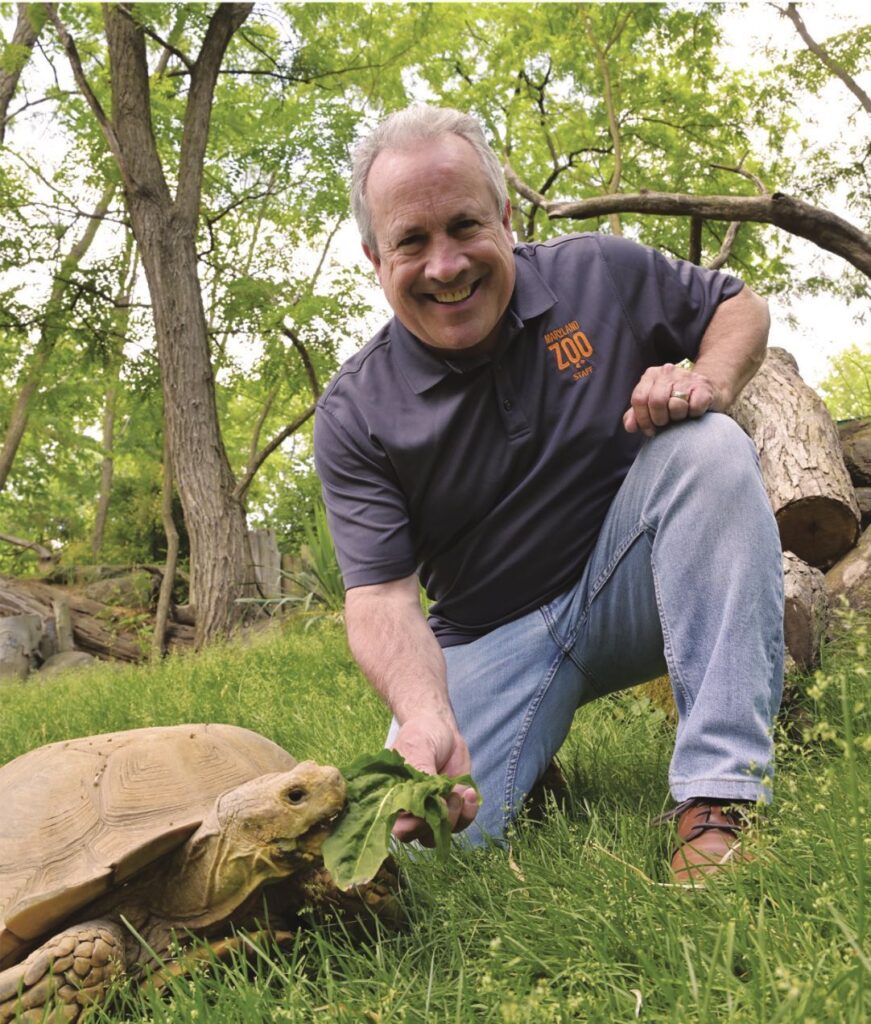
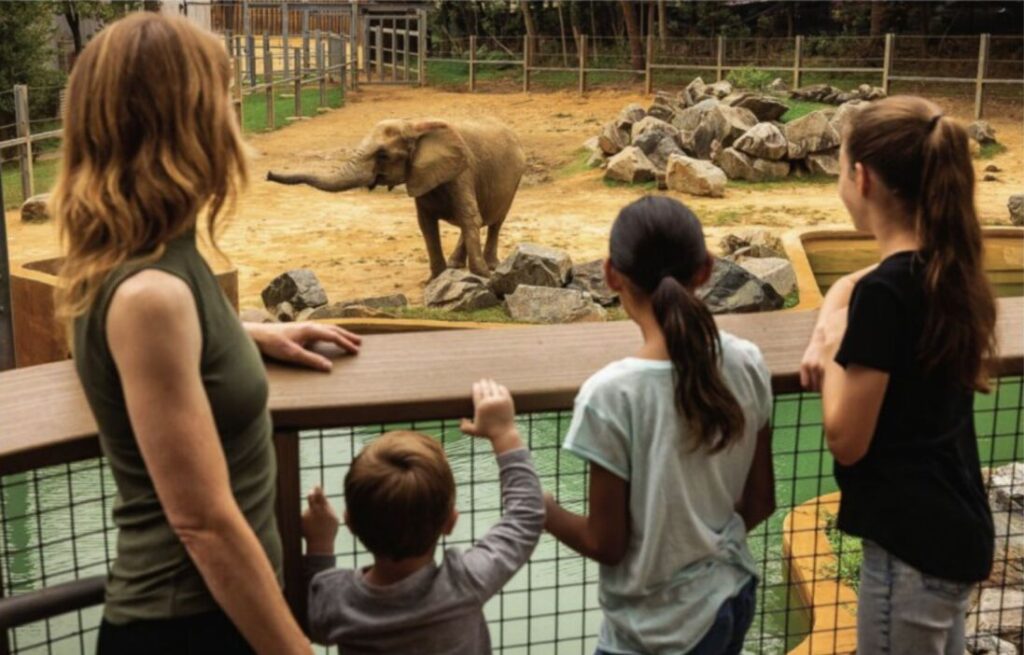
“With so many African animals here, summer season is the ideal time to visit,” says Maryland Zoo President and CEO Kirby Fowler, noting that summers annually attract 100,000 visitors. “Our guests love seeing elephants playing in their pools, chimpanzees cooling off in the shade and penguins diving into the water at Penguin Coast.”
“And this year, we are excited to highlight our zoo’s extraordinary evolution,” Fowler says. “Starting from a small collection of animals haphazardly assembled at the historic Round Stand and Round Cage, our zoo covers nearly 135 acres. More importantly, we have shifted away from presenting animals as an exotic guest experience; now, animal welfare comes first.”
The zoo is now offering a limited-edition swan adoption (with zoo tickets and a plush keepsake included); historic signage is on display; and guests can take guided history tours. In June, it will debut the first new habitat/new animal combination in almost three decades.
Designed for a breeding pair, the Red Panda Habitat features two expansive outdoor yards, at least four viewing opportunities, a shelter from inclement weather and A/C spouts throughout (to accommodate these cold-weather mammals).
To coincide with the Red Panda Habitat’s opening and the 150th anniversary, Zoomerang — “Baltimore’s wildest gala” — returns June 12 after a hiatus. This “red tie” fundraiser transforms the zoo into an elegant, after-hours experience to support its animal care and conservation efforts.
Wild Water Splash Days take place on three weekends — in June, July and August — where kids can enjoy water slides, splash pads and bounce houses. During the July 4 “Red, White and Zoo” festivities, animals will receive holiday-themed treats and the day’s 1,876th guest will have a special animal experience.
Reflecting on zoo history, Fowler notes: “most people are unaware that a mayoral candidate was elected because he supported acquiring an elephant for the zoo, or that our beloved chimpanzee Betsy was a well-known artist whose paintings drew Salvador Dalí’s ire and attracted John Waters’ admiration.”
Fowler joined the zoo in 2020, following his 16-year tenure as president of the Downtown Partnership of Baltimore, where he oversaw the transformation of Downtown Baltimore into the city’s fastest-growing neighborhood, successfully advocated for adaptive reuse of more than 70 major properties, and spearheaded the revitalization of parks and plazas.
He also led the reinvention of the Pratt Street corridor, teamed with the city to launch the Charm City Circulator, led the creation of the Station North and Bromo Tower arts districts, launched Baltimore Restaurant Week and oversaw the rebirth of Baltimore’s public markets, among other initiatives.
“At the Downtown Partnership and earlier when I was special assistant to Mayor O’Malley, I worked to promote the city’s positive attributes, reimagine public spaces and create an environment that fostered community in order to attract people to Baltimore,” Fowler explains.
“I also gained invaluable experience in managing a nonprofit organization and felt I could bring the lessons learned to The Maryland Zoo,” he adds. “Plus, I was drawn to the zoo’s rich history and wanted to be a steward of this historic legacy.”
One of his first accomplishments at the zoo was launching a plan to reimagine Main Valley, the historic core area that had been closed to the public since 2004.
“Main Valley was the original walking path connecting the Main Gate to the central campus,” Fowler explains. “Beginning in the 1980s, we started moving animals out of their cramped quarters in Main Valley to other zoos or to more expansive and naturalistic settings in new areas of our zoo.”
“Now our animals have ‘choice and control’ over their environment,” he adds. “And we have replaced obsolete cages with large and open habitats like Penguin Coast, Chimp Forest, African Watering Hole and the elephant yards.”
The Red Panda Habitat is the first transformational project in the Master Plan. Currently, the zoo is completing drawings for a new habitat for gibbons — a primate species that was part
of its collection 20-plus years ago. Within a few years, visitors will be able to view these small apes with no visual barriers.
Additionally, Main Valley’s middle section will undergo a “complete renaissance,” from the conversion of the historic Elephant Barn into an event venue to the transformation of the old Polar Bear pool into an inviting plaza with a splash pad for guests.
“During my tenure at the zoo, I hope to achieve the complete reinvention of Main Valley, adding even more habitats,” Fowler says. “I also want to make the steepest portion of Main Valley’s pathway more accessible and I’d like to enhance the Maryland Wilderness area with an expansive habitat for red wolves and a new habitat for eagles and snowy owls.”
While dedicating most of his time to fundraising, managing the budget, focusing on the Master Plan, managing a 200-person staff and supporting the zoo’s mission, Fowler makes it a point to regularly leave the office and “immerse [himself] in the beauty of this park setting and experience the majesty of the animal kingdom.”
“I give tours almost weekly, which is when I have the privilege of interacting with animals,” Fowler says. “While I’m not supposed to have any favorites, I really enjoy visiting the chimpanzees, otters, hornbills and Panamanian golden frogs.”
“I also have cleaned our bat cave while dozens of bats flew past my head, donned a full safety suit to spray down the chimpanzee habitat, and prepared a mud/clay bath for our warthogs,” he adds. “Each of these experiences is beyond memorable.”
For more information about the Maryland Zoo, visit marylandzoo.org.
Caryn R. Sagal is a Baltimore-based freelance writer.