



You might not expect to find authentic Italian food tucked away near a small corner of the Patapsco River, overlooking a secluded marina. But for several years, Cinghiale—Italian for “wild boar”—has been offering just that, with a particular focus on Northern Italian cuisine.
The restaurant’s website describes it as a gathering place for both business and social occasions, and its interior reflects those dual purposes.
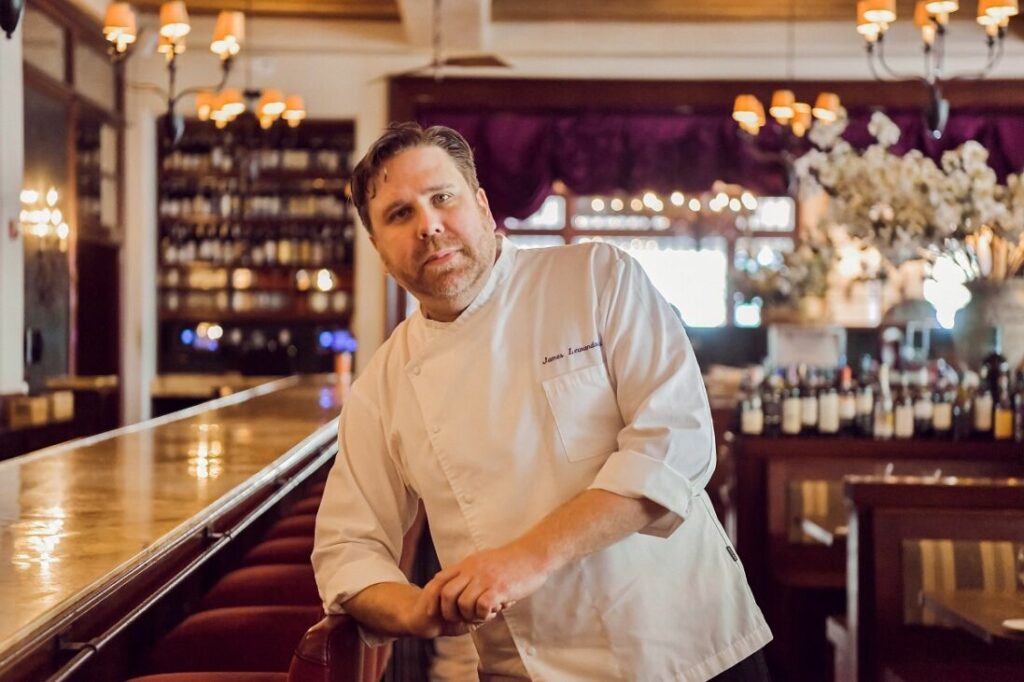
Cinghiale is made up of two distinct, specially designed rooms. Customers enter into the Enoteca, a more casual section with a charcuterie station and a 40-foot bar, decorated by statues of the eponymous wild boars. To the side is the Osteria, which is furnished to have a more formal and serious feeling.
“It’s the same service and the same menu, but you can choose your dining experience. The kind of experience you have can be different whenever you come here, depending on where you sit,” Cinghiale’s Executive Chef James Lewandowski says. “Whether you feel like you want to enjoy some white-tablecloth dining and be pampered, or relax and have a good meal in a more casual setting.”
Lewandowski started working in the restaurant industry when he was 15, hoping to save up to buy a car when he earned his driver’s license. He credits much of his experience with food to his mother, whom he says gave him an appreciation for “good food and good ingredients.”
He started working with Cindy Wolf and Tony Foreman, the owners of Foreman Wolf restaurant group, several years ago, at some of their restaurants like Petit Louis Bistro and Johnny’s. Transitioning to work at Cinghiale, another Foreman Wolf-owned restaurant, was a natural change. Aside from a short hiatus when he left to work for a different restaurant, Lewandowski has been the executive chef at Cinghiale for 10 years and has been part of its staff since it was first built.
Cinghiale has not changed very much from its initial concept, which was inspired by dishes from the Northern Italian countryside. While Southern Italian cuisine focuses largely on the usage of seafood, due to its closeness to the sea, Northern Italian food tends to be heartier and focus more on meat — the restaurant being named after boars is a reference to that. But Northern Italy is also the origin point for many Italian staples, such as pasta and pizza.
“The cool thing about Italy is that it’s had a lot of different influences throughout history,” Lewandowski says. “We’ve had to do some research and look into books and things like that to decide what goes on the menu. We look at well-known regional dishes, but still try to stay current in terms of what the restaurant is supposed to be like.”
Cinghiale’s calamari is particularly popular. But while diners may be used to fried calamari from Italian restaurants, Cinghiale’s take on the dish is marinated in oil, garlic and rosemary before being grilled and sautéed with chili peppers. Other hot items on the restaurant’s menu include the sausage-stuffed casunsei pasta and its lasagnas, which come in mushroom and veal ragù Marchigiana variants.
Of course, Italian cuisine is inextricably linked with the country’s wines. This is where Lindsay Willey comes in—as Foreman Wolf’s chief sommelier, she is tasked with choosing Italian wines to be served at its bar.
“We are always looking for wines that guests will enjoy and that are complementary to the menu, but it’s always important that they represent [the restaurant],” Willey says. “The list is driven more by Northern and Central Italian wines because the menu is the same way. That means that sometimes we will find something really delicious, but if it doesn’t make sense with [Cinghiale’s] concept, we’ll have to pass on it.”
Wine bottles line the booths at Cinghiale, often signed by former guests or attendees of events held at the restaurant. Willey notes that ensuring the restaurant offers enough variety for everyone to find something they enjoy is an important duty for a sommelier.
“Italian wine has gone up and down in terms of popularity,” she says. “We have around 450 labels, so deciding what you want can be a little daunting, but there’s plenty to enjoy.”
While many ingredients used in Cinghiale’s dishes are sourced from Italy, such as the wine, just as many are sourced directly from Baltimore-area farmers and suppliers. Lewandowski’s daughter works at The Baltimore Farmers’ Market, and the restaurant partners with farms around the state to procure seasonal vegetables. Both Italian and Baltimorean ingredients go into giving Cinghiale its unique identity.
“We’ve been here for a while now, and we pride ourselves in doing things authentically,” Lewandowski says. “There are restaurants that are all about whatever the newest thing is, and everyone likes those. But we’ve been doing the same thing for a long time and we’ve kept getting better. We’re planning to stay here for many, many more years and keep improving even more.”