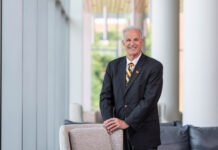

Anastasia “Stacy” Arnold can’t remember a time when she didn’t make art.
“It’s a part of my soul and central to who I am. It’s how I think, move through and understand the world,” she explains. “Through my art, I focus on utilizing our physical beings as metaphors for our emotional and spiritual state, and for the ways we are connected.”
Destined for a career in the arts, Arnold earned a Bachelor of Fine Arts from Maryland Institute College of Art, followed by a Master of Fine Arts from Towson University many years later. Her first foray was starting an ad hoc catering and floral business – “a creative and engaging pursuit” that paid for her studio art practice.
“The business became predictable after a few years and didn’t hold the kind of deep meaning I was craving. The universe must have sensed my restlessness and presented me with an extraordinary opportunity to be an artist-in-residence at a Baltimore middle school,” she explains. “This was a turning point; everything clicked. The deep meaning I found in teaching art to children led me to get certified to teach.”
After serving as a visual art teacher with Montgomery County Public Schools and a visual art resource teacher with Baltimore County Public Schools, she produced study guides, educational videos and teacher training workshops for grant-funded NIH neuroscience education projects.
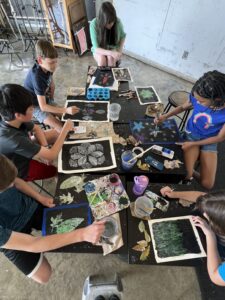
When the grant funding wrapped in 2013, Arnold jumped at the chance to become director of Towson University’s Community Art Center (CAC), where she could blend her skills as an artist, teacher and producer to build something new.
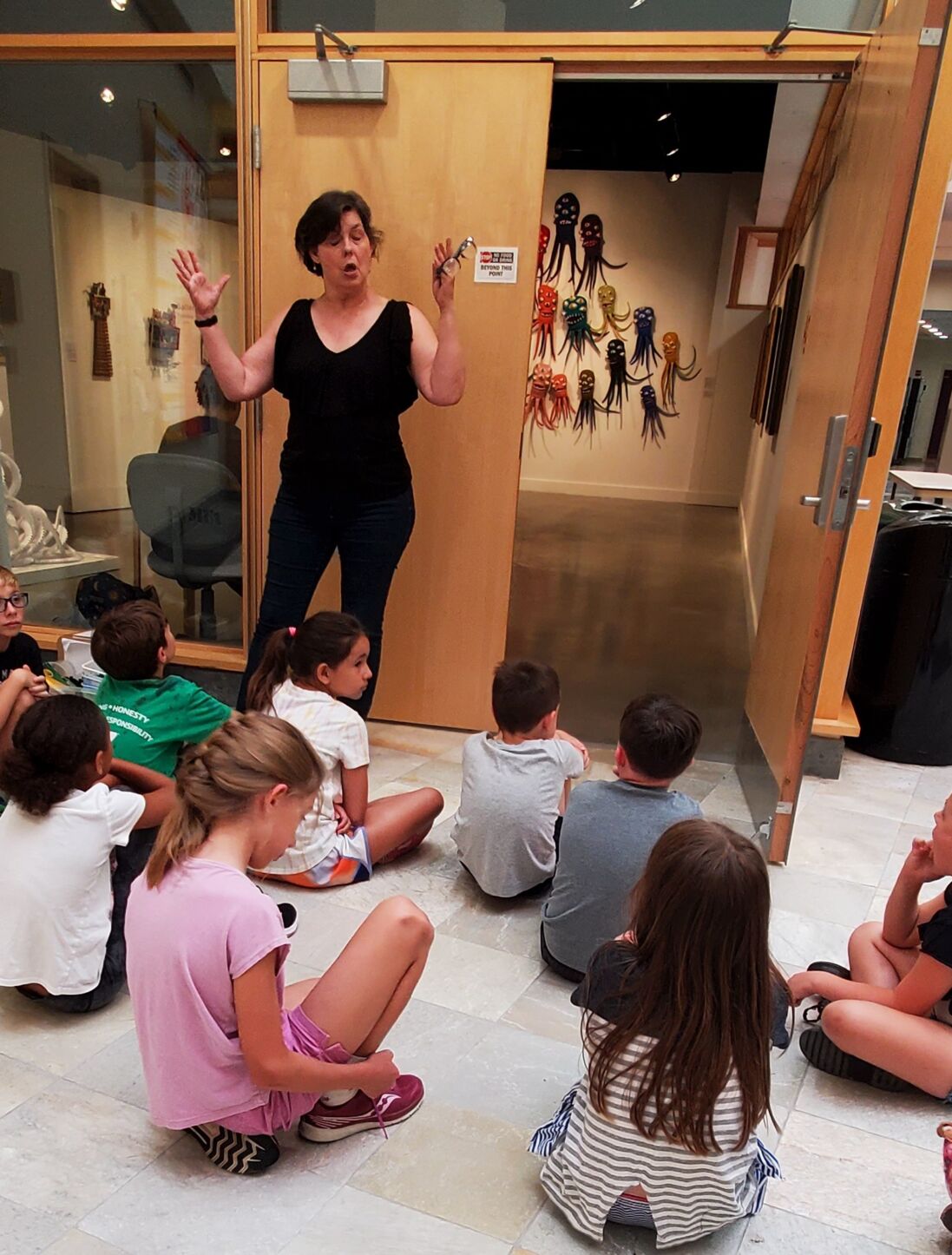
Committed to offering exceptional visual arts experiences to the Greater Baltimore community and contributing to the educational advancement of TU students, the CAC hosts classes, summer programs, special art events and community education opportunities – where people of all ages and skill levels can engage, explore and create.
“Places like the CAC are incredibly important because they function as a dynamic arts hub for the entire community—the university community, families, faculty and the public at large,” Arnold says. “We offer both paid and grant-funded programming to ensure broad accessibility.”
Under her leadership, the CAC has transformed into a learning lab that gives future art and museum educators the opportunity to gain high-impact learning experiences in a community setting.
“At heart, I’m a teaching artist, so it is incredibly rewarding to mentor future educators, helping them find their strengths and embrace their full potential,” Arnold says.
She also takes pride in launching large-scale community collaborative art projects (involving over 400 people ages 5 to 75) and collaborating with the TU Center for the Arts Galleries on Exhibition in a Suitcase programs (which include drop-in free family events, professional development workshops for teachers, PreK-12 school outreach workshops and summer gallery education programs).
After 13 years on the job, Arnold remains “passionate about creating opportunities for the wider community to learn about and participate in artmaking.”
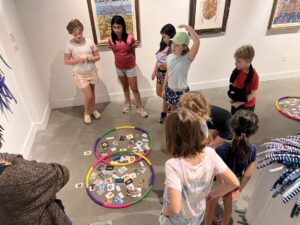
She can’t wait for this summer’s community collaborative art project, which is inspired by the “EYE SPY” exhibition in TU’s Holtzman Gallery. It will include several Community/Family Arts Days with drop-in workshops where anyone can stop by and participate.
Arnold is extensively involved in the design, development and production of the community art project installations in the summer exhibitions. Staying true to her artistic roots, she also continues to draw and paint “biological metaphorical-metaphysical images.”
To learn more about the Towson University Community Arts Center’s upcoming programs and events, visit towson.edu/campus/artsculture/centers/communityart.
Caryn R. Sagal is a Baltimore-based freelance writer.