





The restaurant industry is an extremely competitive field, especially in a major city like Baltimore. Restaurants are constantly opening and closing, with some only lasting a few years. This can happen for a variety of reasons, many of which are not the fault of the owners or anyone involved—the COVID-19 pandemic was especially detrimental and forced many restaurants to close.
Among the shiny new restaurants serving trendy food, though, you’ll find plenty of restaurants that have been open for generations. Some restaurants in the Baltimore area have been open so long that they’ve become community institutions, serving as popular spots for birthday parties, work events, family celebrations or even just casual dinners. Memories have been made in these places, and they’ve become part of Baltimore’s history.
Is there a secret to this longevity? The answer varies depending on the restaurant, but many owners of long-established restaurants credit good service and making customers feel like they’re part of the family.
The Spice of Life
When Charleston first opened in 1997, it was venturing into uncharted territory. The restaurant, opened by current owner Chef Cindy Wolf and her former partner Peter Foreman, was one of the first buildings in the nascent Harbor East neighborhood.
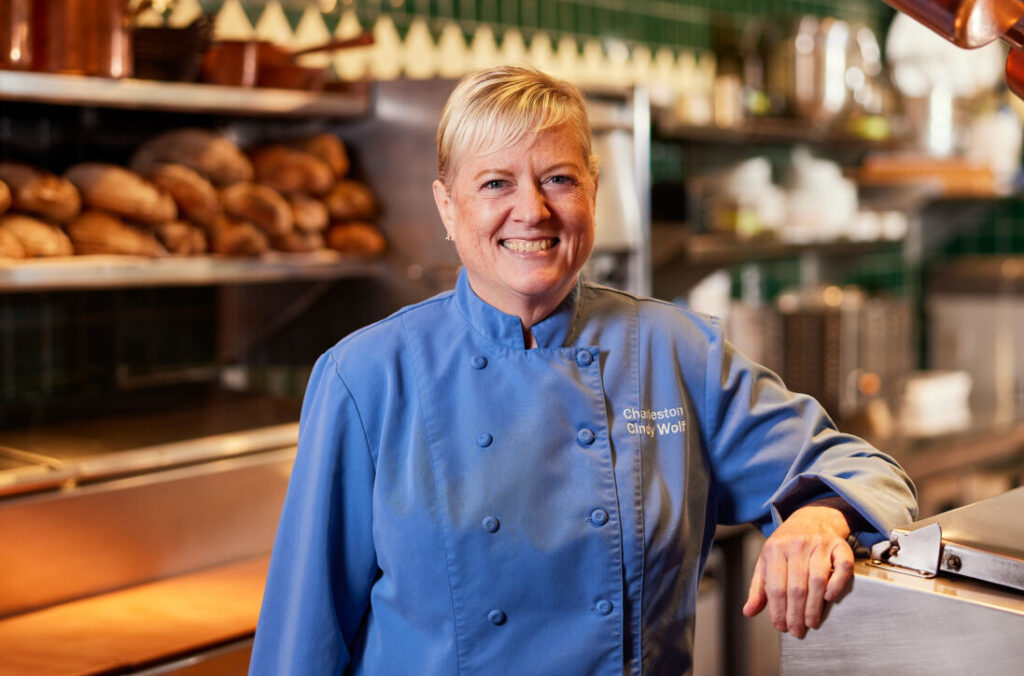
“When we looked at the space, it was all concrete rebar, and they were in the middle of building it,” Wolf recalls. “Our building was one of the first buildings in the whole neighborhood.”
But as the Harbor East neighborhood has grown around it, Charleston has remained open. The restaurant, which specializes in French- and Gullah Geechee-inspired lowcountry cuisine popular in South Carolina, has been open for 28 years.
What makes Charleston special is that customers are unlikely to have the same experience twice. While there are some menu items that have been present since the restaurant opened, such as the popular Cornmeal-Fried Oysters with Lemon Cayenne Mayonnaise, the menu changes day to day.
The one thing that has remained consistent is Wolf’s presence in the kitchen.
“I have always been the chef of the restaurant, even though we’ve opened up to six other properties,” Wolf explains. “I’ve always worked at Charleston every day. I’ve always driven that restaurant. It’s what I love, and it’s my life.”
Wolf adds that several of the other employees who work in Charleston’s kitchen have been working there for over a decade. It’s a team effort that’s also been supported by the local community.
“We know that restaurants are all about a community spirit,” Wolf said, discussing the difficulties of the COVID-19 pandemic. “We all know how much we missed being in restaurants when we couldn’t go out to them. … Important moments happen in restaurants, and when you’re in the same place for 28 years, you become a part of the community.”
All in the Family

(left) and Rebecca Dolan.
Some long-lasting restaurants thrive as their ownership is passed down through generations of the same family. This is the case for steakhouse The Prime Rib, which opened its flagship location in Baltimore in 1965. It’s one of Baltimore’s oldest restaurants, recently having celebrated its 60th anniversary in October 2025.
Original owners Buzz and Nick BeLer are legends in Baltimore’s restaurant scene, but the business is now owned by their cousin, Rebecca Dolan, and her mother.
While the restaurant’s interior is heavily inspired by the luxurious supper clubs of the 1940s and the steaks it serves are extremely high-quality, it had fairly humble beginnings. But those origins have continued to influence The Prime Rib to this day.
“I was going through a relative’s personal effects recently, and I found a copy of the original Prime Rib menu. It was essentially just prime ribs and a baked potato,” Dolan recalls. “I was shocked because there were so few items. Whenever I feel stressed or am questioning what I’m doing, I go back to that. Those are the things we’ve always been good at, without sacrificing quality.”
Consistency is the name of the game at The Prime Rib. Changes to the steakhouse’s menu over the years have been fairly minimal, and Dolan notes that only long-time regulars would notice them.
And as fancy as The Prime Rib is, it’s always been an approachable, friendly place where the staff aim to make any customer feel like a regular.
“I’ll be on the phone with our GM and he’ll remind me about a guest who’s coming in who likes a certain kind of wine and peanuts at their table,” Dolan says. “You won’t believe the notes we have on guests to help make their time special. We don’t get it perfect every time, but we’re human.”
Community and Culture

Italian restaurant Liberatore’s first opened its doors in Eldersburg in 1988. Thirty-seven years later, the restaurant is not only thriving, but it has expanded to locations in Bel Air, Perry Hall, Timonium, Westminster and even a seaside location in Ocean City. The Liberatore family has also opened two spin-off restaurants, Lib’s Grill and Liquid Lib’s.
While the Liberatore restaurant empire has continued to grow and expand throughout Maryland, it still focuses on serving traditional Italian food. Some of the items on its menu have been there since the Eldersburg location opened.
“There are [menu] staples we can’t change because there would be a riot in the community,” says Dante Liberatore, Liberatore’s owner. “[Our regulars] don’t come to Liberatore’s for the new, cutting-edge thing; they’re coming in because they know what they like.”
Liberatore also credits the restaurant’s continued operation to its focus on service and creating a friendly atmosphere, something he learned from his parents when they worked in the restaurant industry. Liberatore’s has also led him to become more involved in the community, serving on leadership boards in Carroll County, speaking with children at schools and participating in charity events.
But the continued operation is not only because of his and his family’s efforts, but also because of the hard work of the restaurant’s employees.
“It would be arrogant to think that such longevity can be accomplished without a commitment of staff,” Liberatore says. “And I think I can sum it up with one word, and that’s culture. We have such a diverse group of employees, but there is a common culture of hospitality, and that translates into the kitchen.”