


Quitting smoking is hard — really hard. But quitting is now more attainable than ever with social changes, new treatment options and free programs.
Here’s what local experts have to say about quitting smoking — for good.
In Maryland, 9.6% of adults smoked cigarettes, according to findings from the Centers for Disease Control and Prevention’s 2022 Behavioral Risk Factor Surveillance System.
According to the CDC, nearly 68% of adults who smoked said they wanted to quit smoking and half of adults who smoke cigarettes report trying to quit in the past year.
But quitting may not be as simple as tossing the carton.
If a person has smoked for a decade or more, the addiction might be more challenging to break because of how ingrained that behavior is, according to Dr. Niharika Khanna.
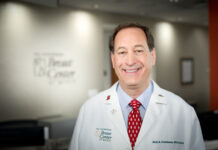
Khanna, a professor of family and community medicine at Baltimore’s University of Maryland School of Medicine for more than 30 years, is the director of the Maryland Tobacco Control Resource Center.
“This (smoking cigarettes) has made you feel comfortable at times, it has taken away anxiety at times, so it is very difficult for individuals to give up a habit that has been so much a part of them,” Khanna says.
Another challenge longtime smokers face in breaking the addiction lies in dealing with the social component of smoking, Khanna says. When a person’s friend group has a habit of going outside together to smoke, it can be hard to resist the urge to go with them.
However, Khanna points out that quitting smoking is more socially accepted than ever before and making your peer group aware is more likely to receive supportive reactions.
Social bonds can even be used to help fight the addiction. Quitting together with a friend, partner or loved one can offer those trying to quit support and understanding.
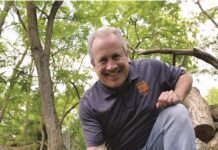
“[They can be] part of the support mechanism — you’ll both know what you’re going through together,” Dana Moncrief, director of Maryland’s Center for Tobacco Prevention and Control, says.
Even without a quit-buddy, Marylanders can benefit from the understanding of “quit coaches,” accessible for free through the Maryland Tobacco Quitline.
“The quit coaches are often former smokers themselves, so they can really connect with the participant and they’re often master’s-level trained,” Moncrief says.
According to Moncrief, the quit coaches can help people who want to quit to create a plan to quit, direct them to other resources like apps and behavioral supports, counsel them, and help them access nicotine-replacement therapies.
Finally, quitting smoking can be very challenging because of how addictive nicotine is.
“Nicotine itself is a highly addictive substance and it does get into your brain and then hijacks all those receptors, so it already makes it very difficult for you to quit,” Khanna explains.
According to the U.S. Food and Drug Administration, when NRTs are used properly, it can double a person’s chances of successfully quitting cigarettes permanently.
NRTs work by providing small amounts of nicotine to help people manage their cravings and reduce withdrawal symptoms.
While counseling and NRTs can increase a person’s chances of success in quitting smoking, it’s also important to remember that quitting is a journey, and many people try to quit several times before they succeed.
“[Tobacco] users average four to seven quit attempts before they have success,” Moncrief says. “We’re really here to support and help people through that quit journey.”
Khanna emphasizes that even if someone’s first, second or third time quitting isn’t permanent, every period of time a person stops is a success.
“Even if you stay away from cigarettes or vaping or whichever form of tobacco or nicotine for five weeks, that’s a success,” Khanna says. “Every single time you do that, it’ll get easier and easier and eventually it will happen — you have to have faith in yourself.”
Resources
Baltimore County Tobacco Use Prevention and Cessation Program
Offers free virtual classes and in-person one-on-one support services to Baltimore County residents who want to quit tobacco and vape use. Free nicotine replacement patches, gum, lozenges, and Chantix (with prescription) are also available to those attending these classes.
410-887-0565
tobacco@baltimorecountymd.gov
baltimorecountymd.gov
Maryland Tobacco Quitline
Provides free services to help stop smoking or become tobacco free.
1-800-QUIT-NOW or 1-800-784-8669
smokingstopshere.com
Truth Initiative
Offers a digital quitting program for people ready to quit smoking, vaping, using oral or nicotine pouches, or any tobacco product.
202-454-5555
truthiniative.org