




Breast cancer is the second largest killer of Maryland’s women and one of the most pervasive cancers in the country, leading many to ask what they can do to reduce their risk.
One prevention method available is a prophylactic mastectomy, the removal of one or both breasts that do not yet have cancer, typically done for people who have a high risk of developing breast cancer in their lifetime.
So, how much does the procedure reduce a person’s risk of developing breast cancer? Who should consider getting the procedure? And what are the cons associated with it?
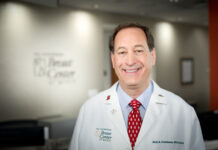
Dr. Neil B. Friedman, head of the Hoffberger Breast Center at Mercy Medical Center in Baltimore, says that the procedure heavily reduces the incidence of patients developing breast cancer and allows them to continue without living under the shadow of high risk.
“You probably lower their risk by at least 95[%] to perhaps 98% or more. So, clearly you can dramatically lower the risk over what their risk would be otherwise,” Friedman says.
He adds that there are several types of patients that are candidates for the procedure.
The first group is people who have previously had breast cancer and had one breast removed, and are now seeing some potential abnormalities in testing.

The second group is people with genetic predispositions, including having the BRCA gene mutation, which increases the risk of cancer by 85%, and the third group is people with serious family history of breast cancer.
Friedman says that at Mercy, they typically do 40 to 50 prophylactic mastectomies a year, meaning the procedure isn’t super rare or super common, but that the team has plenty of experience.
He adds that there is a support system in place for people who undergo the procedure, and they have access to all the same resources as patients diagnosed with cancer.
“We treat them just like they’re breast cancer patients, because they’re having a breast cancer procedure. They see our nurse navigators. They see me or my colleagues,” Friedman says. “My nurse navigators will hook them up with support groups like at Hopewell [Cancer Support] or others if they need it. And there are lots of different support groups in the Baltimore metropolitan area to talk to if they need it.”
But as with any procedure, there are some cons that Friedman says make getting the surgery a difficult decision to make in some cases.
He says that there’s been a small handful of patients that he’s had to have a difficult conversation with and tell them no when they ask for the surgery because he felt their risk was not worth potential complications.
“Even though we can do lots of surgeries and don’t have complications, you’re removing a healthy body organ,” Friedman says.
Friedman says that Mercy’s plastic surgery team is highly skilled and can do reconstruction surgery afterwards, but there can be loss of sensation and sometimes the cosmetic result is not exactly what the patient desires.
Aside from these risks, if you are interested in learning more about prophylactic mastectomies, including risk factors as well as benefits, the National Cancer Institute has a resource guide available at cancer.gov/types/breast/risk-reducing-surgery-fact-sheet.