



The Peabody Institute of Johns Hopkins University is launching an all-new arts education program, the first of its kind at the historic conservatory and in any college in the United States: the Bachelor of Music in Hip-Hop. What started out as a single class has since grown into a full major, where students interested in rap and hip-hop performance can hone their skills and learn more about the genre’s history and culture in a one-on-one instructional environment.
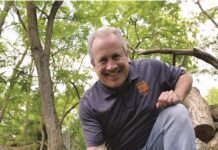
This new program is led by Wendel Patrick, who taught the original hip-hop class at the Peabody Institute in 2016. Patrick is a producer and multi-instrumentalist who also performs under his given name, Kevin Gift, and is currently the host of “Artworks” on Maryland Public Television.
“I’m thrilled to work with my colleagues at one of the top conservatories in the country to advance the training of young rappers, turntablists, producers and beatboxers,” Patrick says. “I’ve seen the growing demand for a degree program since my first hip-hop class, and Peabody’s diverse repertoire and curriculum provide opportunities for students to appreciate, explore and engage with a wide range of styles, techniques, critical perspectives and artistic traditions — from new media where performance meets technology to established forms that have historically been excluded from the conservatory setting.”
Before the conception of the Bachelor of Music in Hip-Hop, the Peabody Institute offered a few genre-specific areas of study, including computer music and jazz. While there have been other colleges that feature hip-hop study programs, such as the University of Arizona’s hip-hop studies minor and the McNally Smith College of Music’s hip-hop studies diploma, Johns Hopkins University is the first college in the U.S. to offer the field as a major.
Students will work with a variety of resident and visiting artists, including rapper and producer Lupe Fiasco, who will be part of the major’s inaugural facility. Fiasco co-founded the rap mentorship program Society of Spoken Art (SOSA) in 2015 and currently teaches the class “Rap Theory and Practice” at MIT.
“I’m honored to be joining the faculty of the prestigious Peabody Conservatory doing what I love most: rap,” Fiasco says. “I look forward to advancing the study and practice of rap and hip-hop into the upper echelons of higher education within a program that will surround the core performance training with coursework in the cultural history and sociopolitical environment that gave rise to hip-hop and the genre’s popularity and influence.”
In an interview with JHU’s student publication, “The Hub,” Fiasco clarified that he “specifically [does] not teach hip-hop,” and that his classes will focus on rap and the techniques that go into the art form.
“At high school, we didn’t have a hip-hop department — we were the hip-hop department, the guys and gals in the school who got together and rapped at the end of the day,” Fiasco added in the interview. “There’s something special about the academic space and creativity. As much as people may think those are two separate worlds, I think that having a scholastic framework around a creative practice gives some kind of standards to it while also giving students a safe place to explore and find different coaches.”
The Bachelor of Music in Hip-Hop also aims to address hip-hop and rap’s lack of presence in musical academia. Hip-Hop studies is a relatively new field, with few opportunities for aspiring artists and rappers to pursue classical education in the genre. Peabody Institute Dean Fred Bronstein notes that the program is an “important opportunity” for the school.
“Peabody has been a leader at the intersection of art and education for over 150 years, and we couldn’t be more excited to foster and support the talents of future generations of hip-hop artists in collaboration with those who are pushing the art form forward, and to do so in a city, Baltimore, that itself has long been fertile ground for the voices of hip-hop,” Bronstein says.